

Lily Thorne Studio
Finding the way home to working with wood.

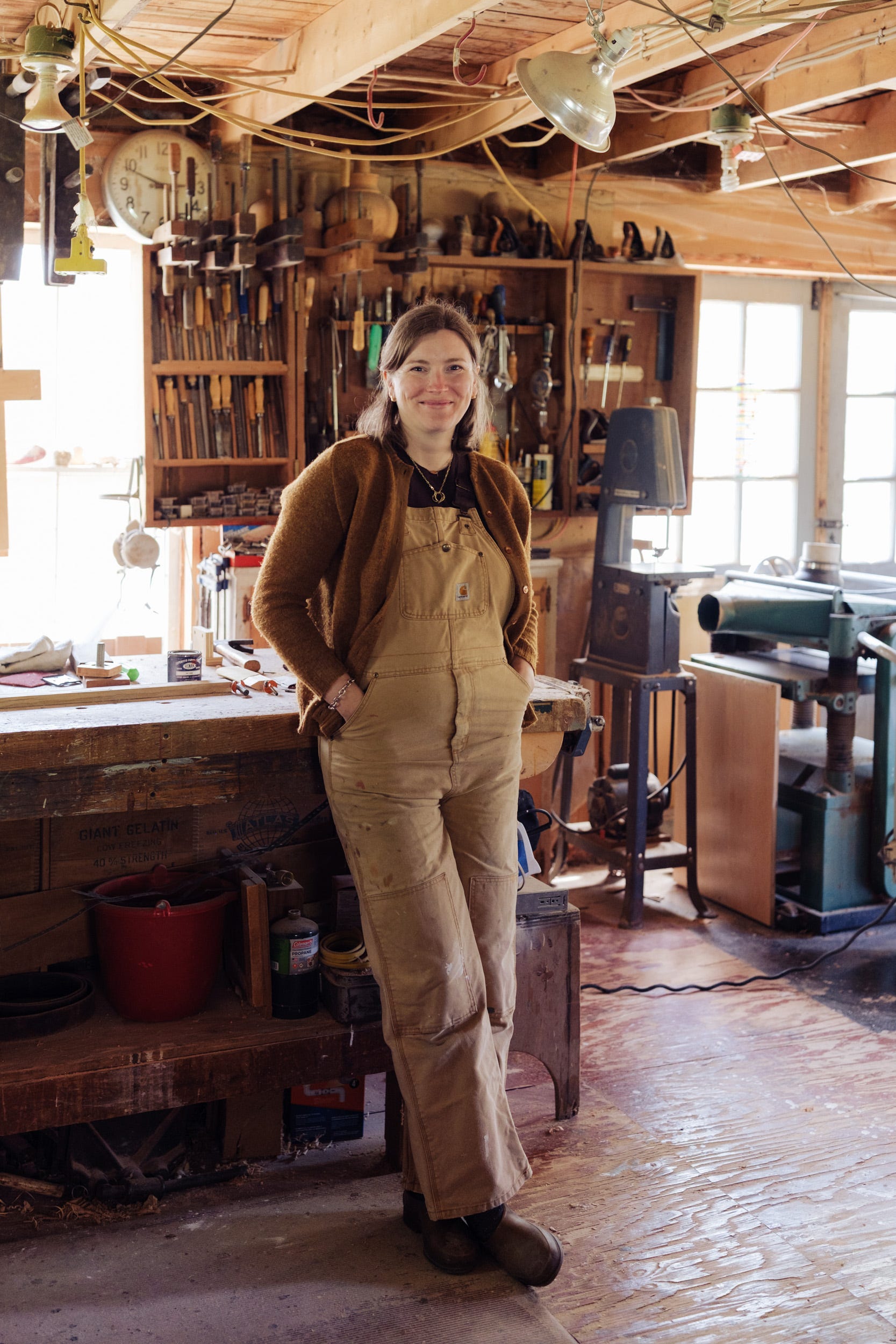
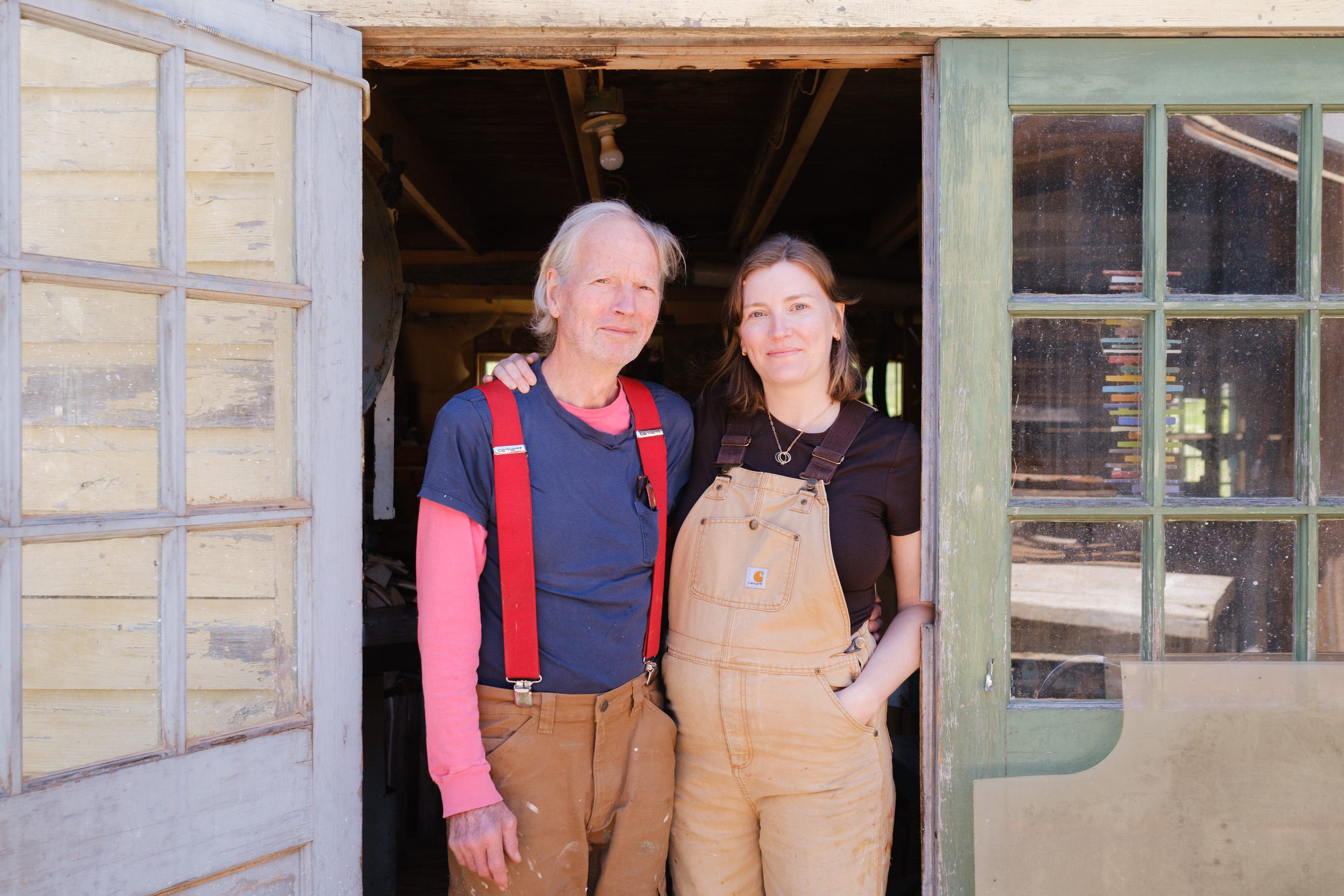
For our second installment of Meet the Berkshires, we are delighted to introduce you to Lily Thorne, a fine woodworker and maker of custom furniture and tableware. Taking an analog approach, she designs with pencil and paper at her drafting desk and builds with locally sourced, air-dried lumber in the magical workshop she shares with her father, Peter. It is often said that you can’t go home again, but Lily Thorne seems to be an exception to that old adage. Perhaps coming home can be the catalyst for a second act that was always meant to be?
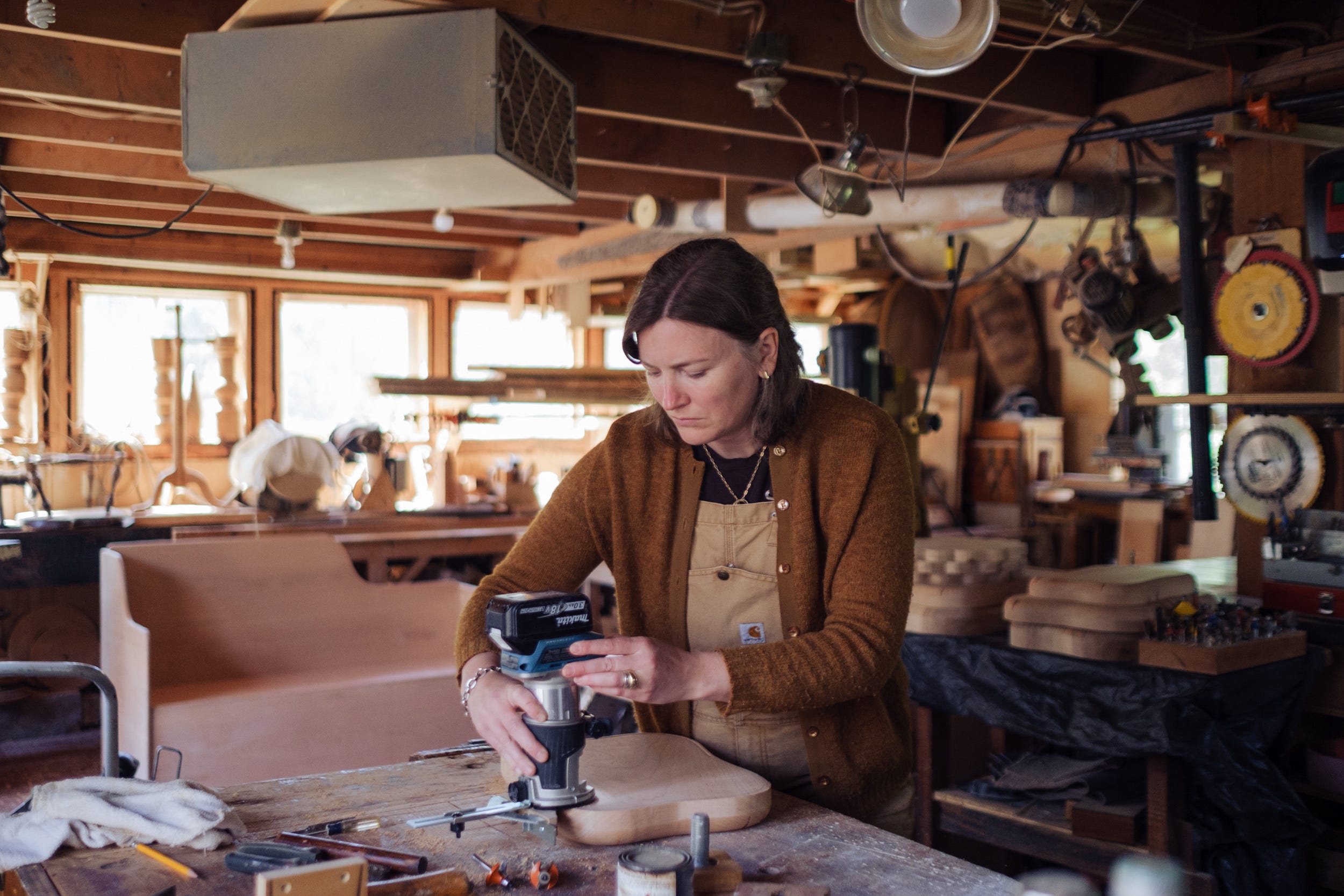
PB: What was it like growing up in the Berkshires, and what were you like as a kid?
LT: I was born in West Stockbridge and grew up in the house my parents still live in. Growing up in the 80s and 90s, in a rural area provided a wild amount of freedom, especially as I compare it to raising a child now. I was in the woods, walking downtown for penny candy, collecting cans for said penny candy, catching frogs in the stream and generally running amuck by myself or with a friend. I’m sure my parents had a general idea of where I was and what I was getting up to, but the 90s public service announcement, “It’s 10pm, do you know where your children are?”, seemed relevant. I usually had mud under my fingernails and was working on some little creation or another, building with blocks, making potions outside, making boats in my father’s shop to float down the stream.
PB: You left the Berkshires for school and work – can you tell us where that led you? What did you study?
LT: I went to Massachusetts College of Art & Design in 2004 to study sculpture. The art room in high school was where I felt most at home and it seemed like a natural progression for me to go to art school. My parents are both wildly creative people and raised three daughters working in the design, art, and craft worlds. They were very supportive of me finding my way into those worlds as well.
Studying sculpture at Mass Art meant that I could work with many materials like ceramics, metal, glass, wood, and much more. I was particularly drawn to metal, casting bronze and iron for sculptures and furniture parts. It was a fun but stressful time. Creating conceptual work was hard, which feels like quite the understatement. I was just starting to learn that working within the boundaries of function (objects having purpose) helped my creative process… but then I took a 12 year hiatus in retail.
I moved from Boston to Brooklyn in 2008. I was a little lost, a little young, and not sure how to make art a career. So I got a job in a night club and at a small boutique in Brooklyn. That store, Bird, ended up being a wonderful, women-run company where I took on a role as visual merchandiser and manager, eventually working my way up to a director role there. I met lovely, creative humans who were also trying to juggle making their own work and making enough money to live in New York City. I grew up a whole lot, learned how much I loved working in a collaborative environment, and understood that at some point I really wanted to find my way back to working with my hands.
PB: What brought you back up here? And what was it like to return as an adult to this area?
LT: In 2020 I had a baby, got laid off from my job, my husband’s job went remote, and we started scheming on a way to move back to the Berkshires. My husband and I had hoped to move back to the area for many years, but weren’t sure how to translate the work we were doing in the city to something that would support us up here. All of a sudden we had our answers or at least a few of the big ones sorted. We were lucky enough to find a little house down the street from my parents that needed a lot of love. We spent a year making it our home and settling in. It was wild to return to this place I hadn’t lived in since I was 18. Not only as an adult but as a mother. I feel like I had a growth spurt. The ability to reflect on myself as a child in the place I grew up, while also learning to be a mother, was transformative. And as the intense early days of motherhood slowly morphed into the exhausting but slightly more independent days of toddlerhood, I began to imagine what it would be like to work with wood and work with my father.
PB: What is it about woodworking that makes it the right fit, for you, in this moment?
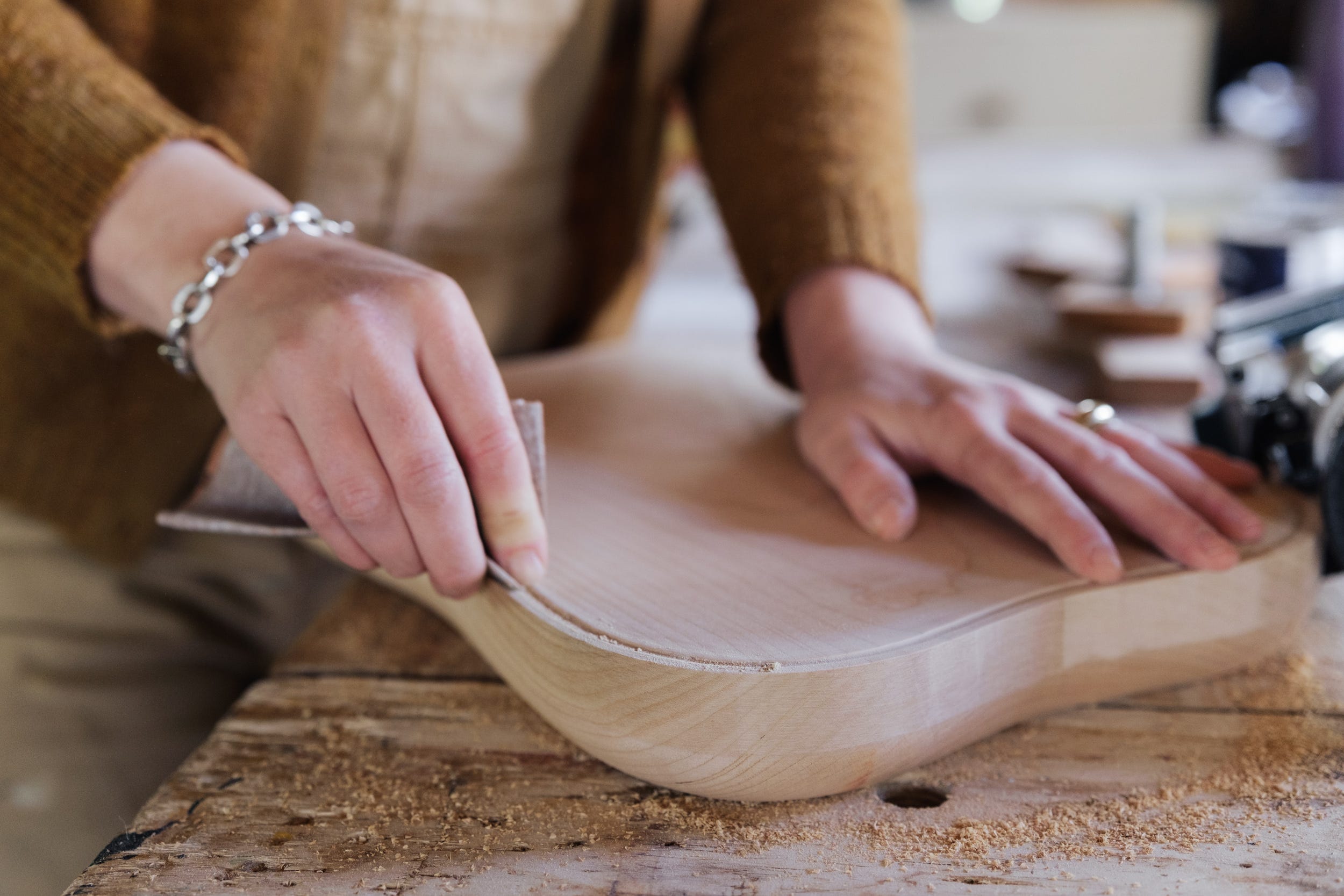
LT: In a weird roundabout way, all the choices I’ve made feel like they’ve led me to woodworking. It’s not what I dreamt of as a kid. I thought I’d forge my own path. I wanted to be an artist not tethered to one material. But as I began to discover this new version of myself – a part time carpenter gutting and renovating our home, a mother drawn to the efficiency of objects, a creative person in love with form and craft, and a daughter living down the street from a master woodworker willing to teach – it seemed a pretty obvious choice to begin making furniture. I still feel so lucky. I’ve fallen in love with the material and its ability to go from a rough, rugged material to something smooth, defined, and functional. Wood is constantly transforming, even while you keep it within the confines of function, wood still provides an unearthly amount of possibilities.
PB: What is your favorite part of working with wood – is it the design? Bringing that design to life? Seeing it in its final iteration? Simply the act of creating?
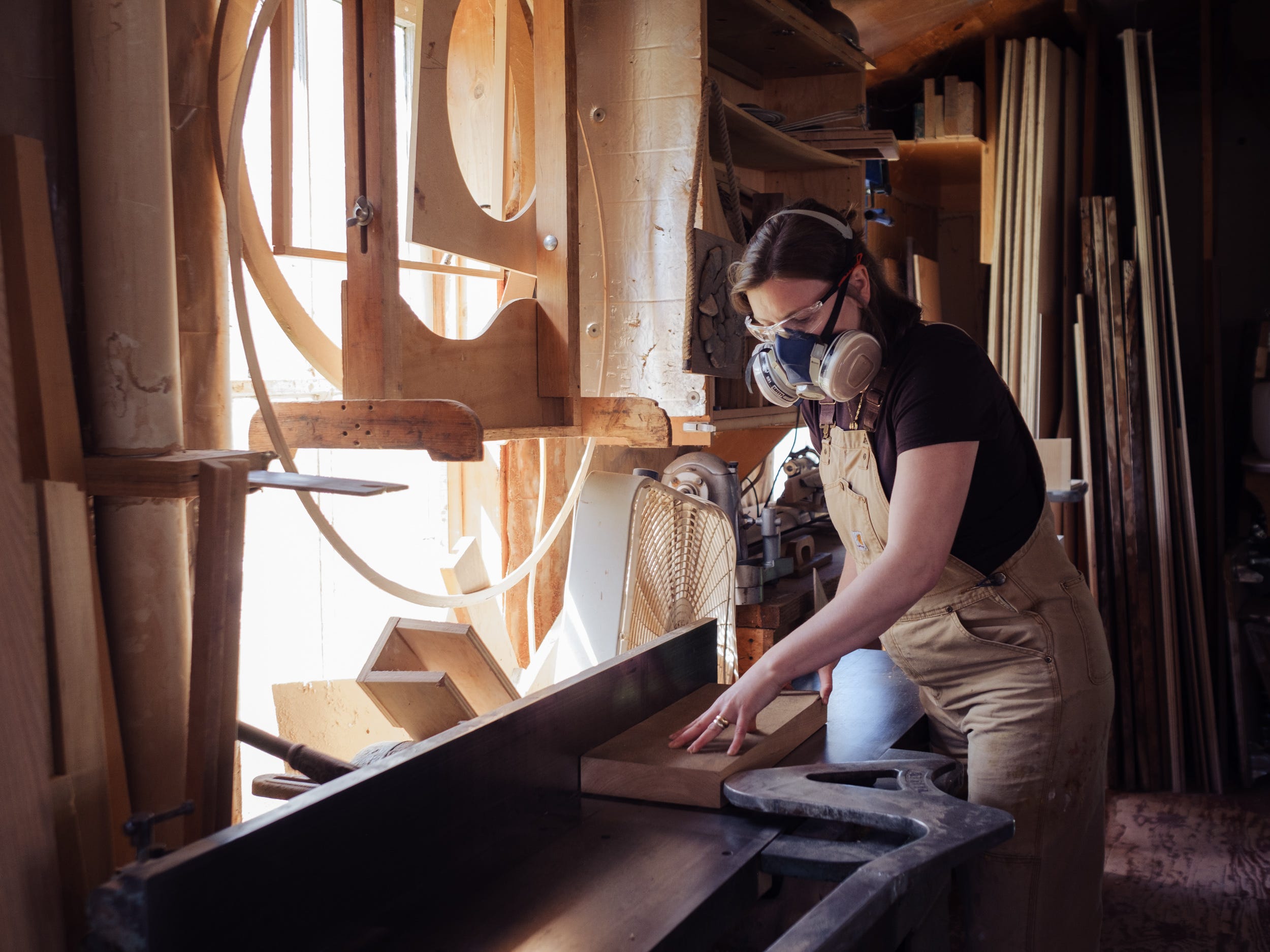
LT: I have quite a few, but I love the point where all the parts that I’ve dimensioned, plained, jointed, sanded, etc, finally come together. Assembling and gluing all of these carefully worked pieces and confirming that all the designing and measuring was done correctly (and it actually fits together) is very satisfying and quite relieving at times!
PB: Can you tell us about your process?
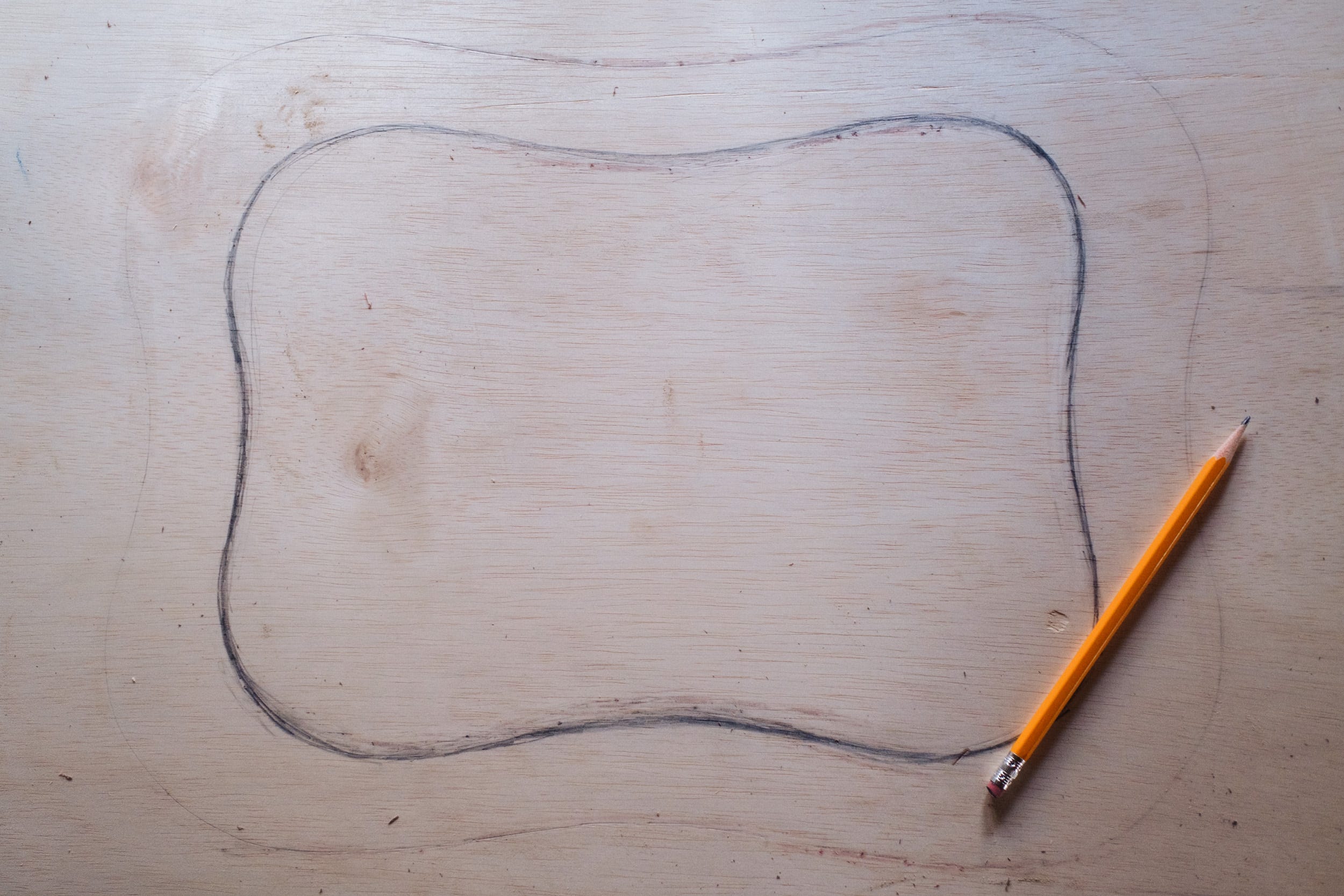
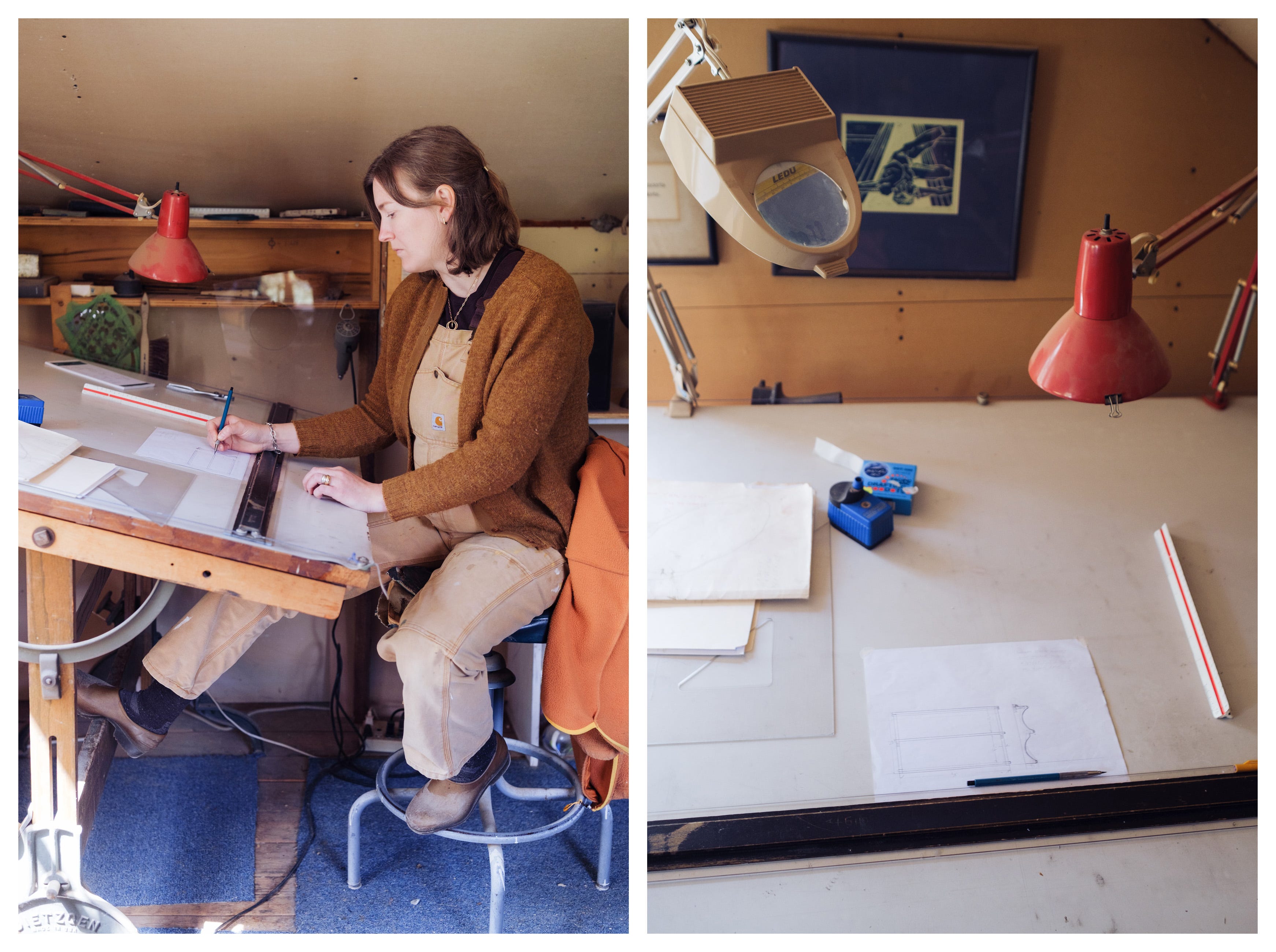
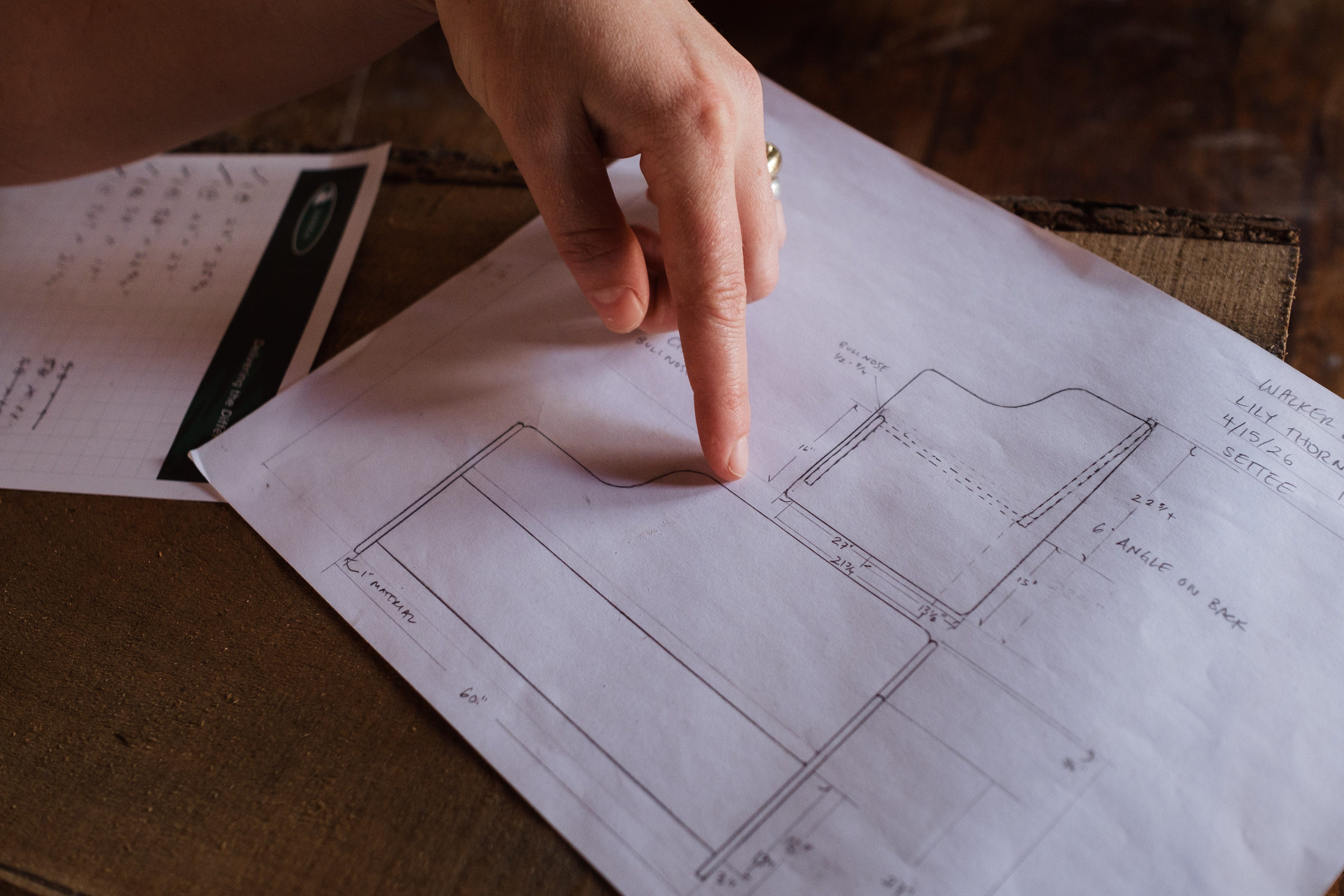
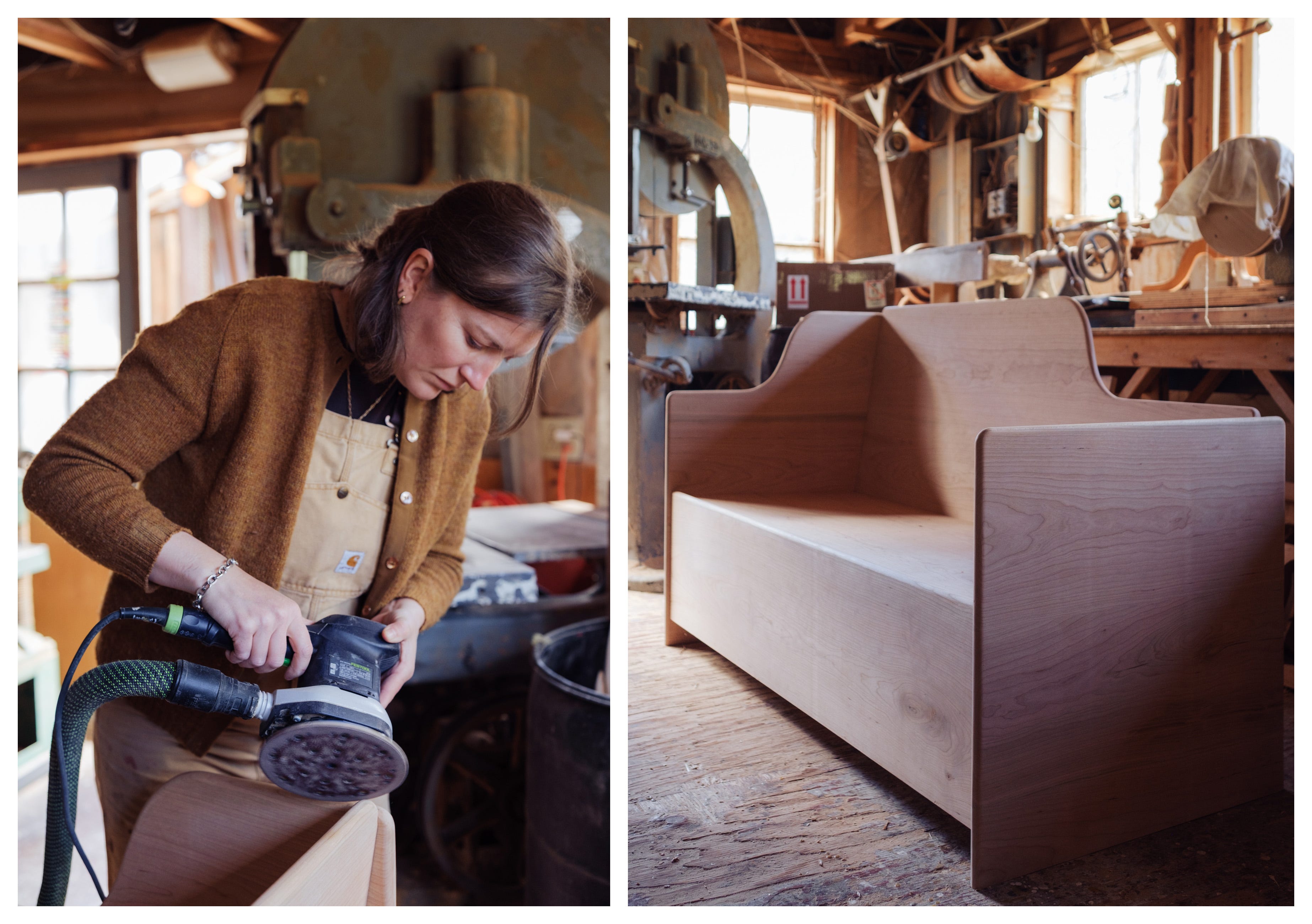
LT: My process varies depending on the project. Most of the year I’m working on custom furniture or cabinetry for clients. A few times a year I pivot and create work of strictly my own design for markets. I like moving between these worlds as it allows me to engage different parts of my creative brain. Working with clients is collaborative. I love working through the challenges of taking someone’s idea or design and ensuring their vision is seen and heard and translated into something the client and I are happy with. Currently, I am working on a cherry settee with a wonderful client I’ve collaborated with quite a bit. He showed me a picture of a Shaker bench that immediately had both of our creative brains working towards a design that blended that Shaker aesthetic with a classic settee which would fit perfectly into his space. We talked about material, settling on cherry that would be warm and inviting and was often used by the Shakers.
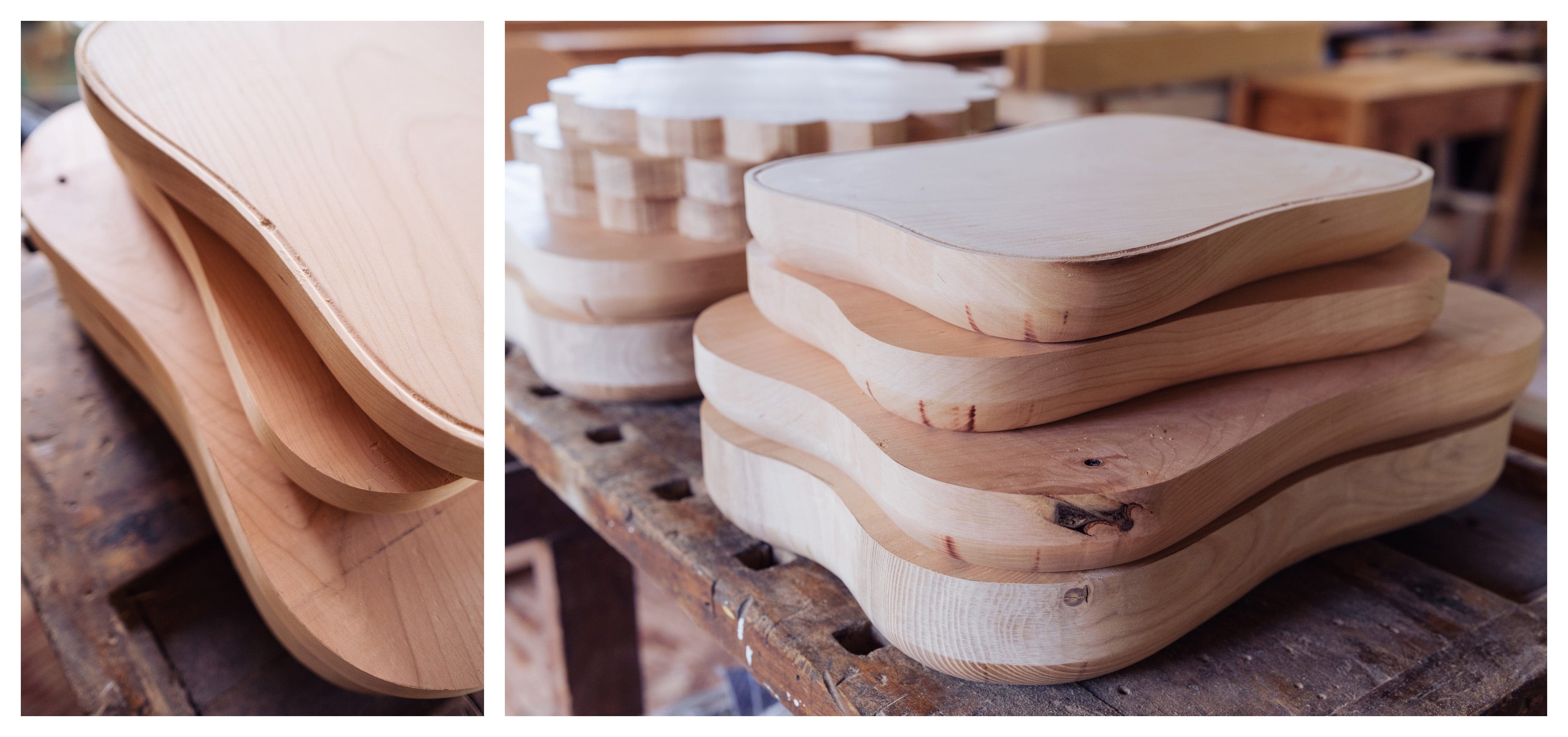
Alternately, I work all year on my own designs. Finding inspiring shapes or curves, letting ideas and designs slowly surface. I find this process equally satisfying and a necessary companion to the other work I do.
PB: How do you source the wood that you work with?
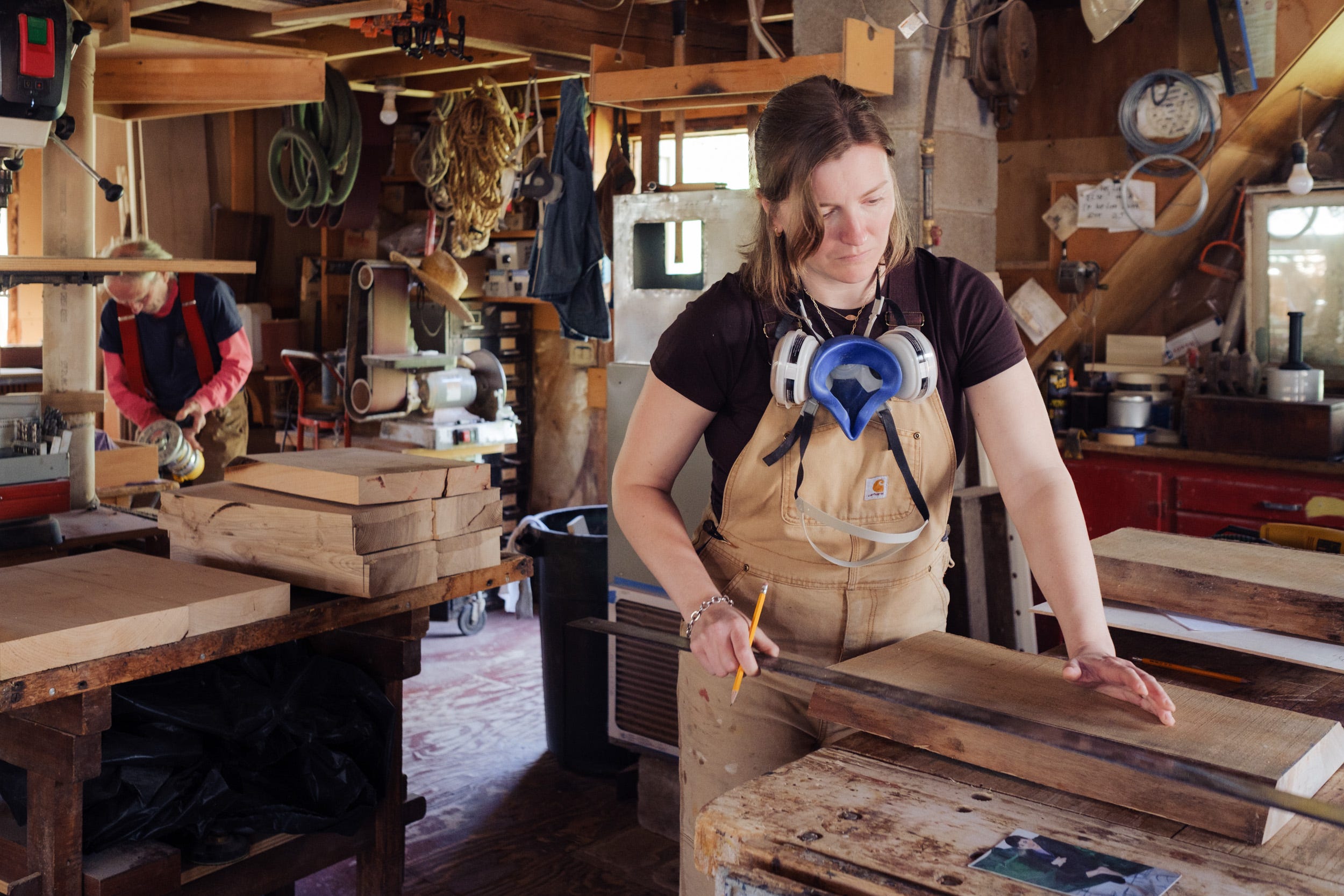
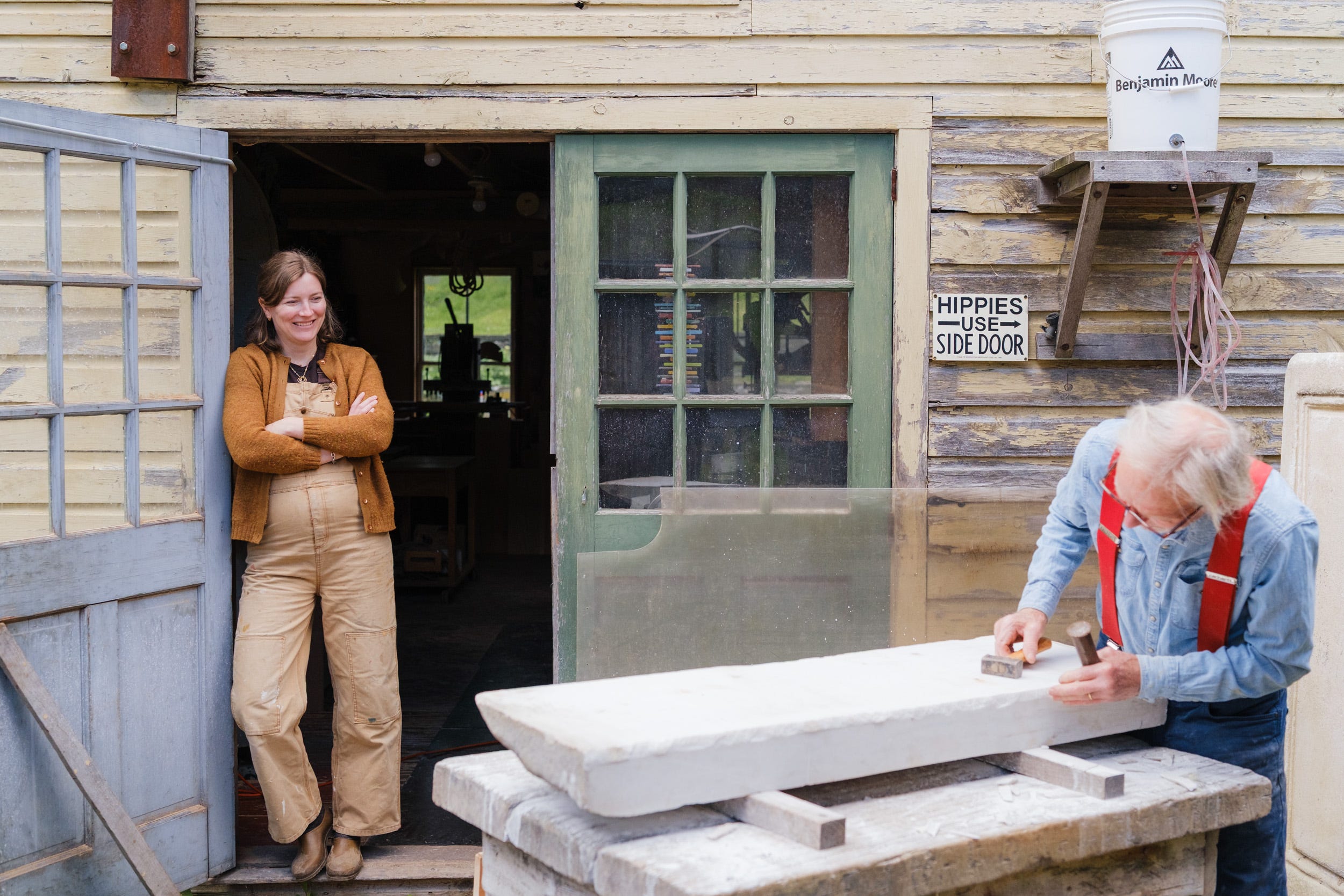
LT: I’ve learned so very much about wood from my father. His reverence for the material is evident in the way he talks about how trees grow, their lifespan, how wood shrinks and grows even after it’s been dried and assembled and how we can shape it into something beautiful.
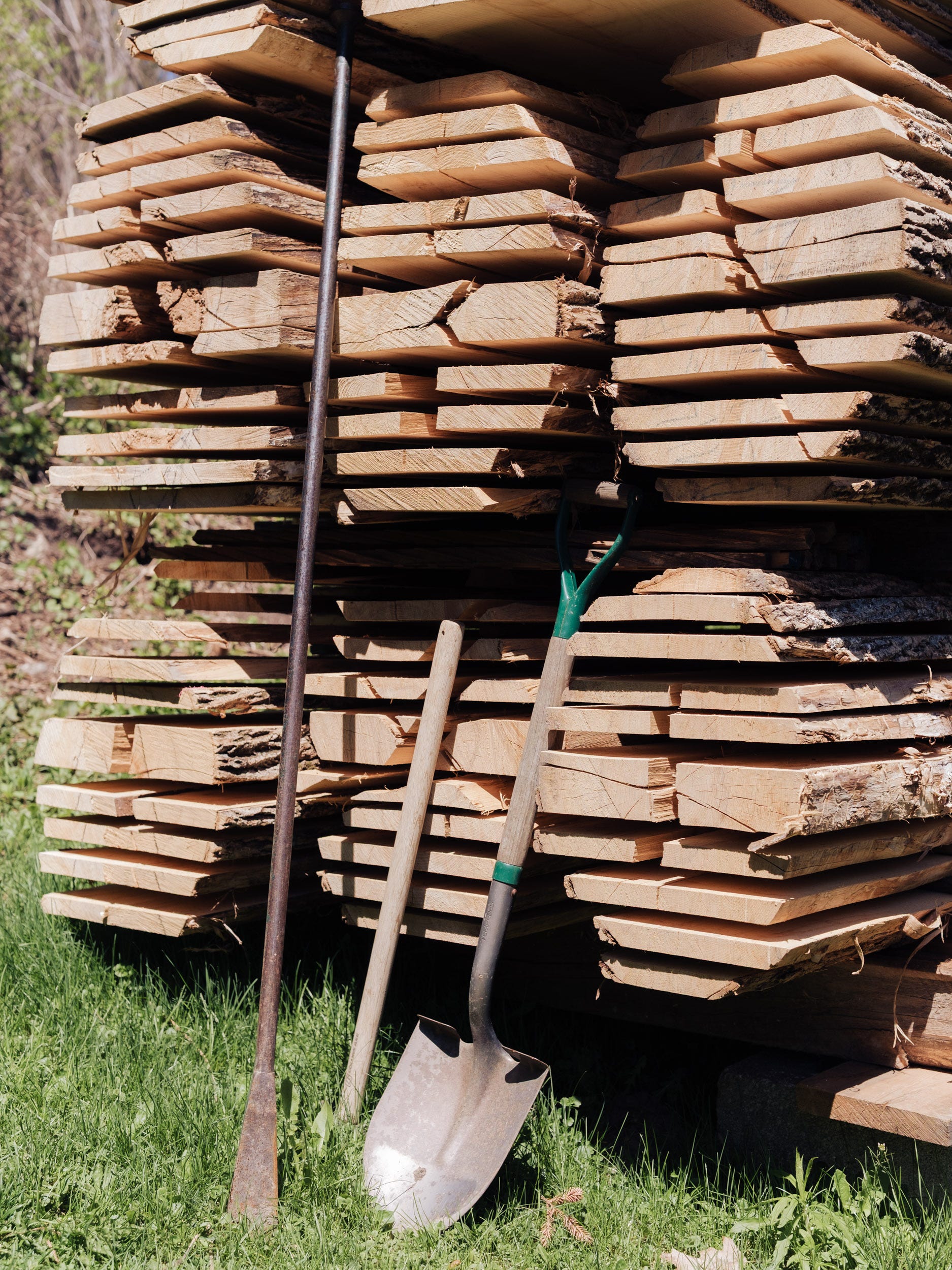
He has taught me the benefit of working with air-dried material. Most wood purchased at a lumber yard is kiln-dried. A great way to dry wood quickly and efficiently. But air-dried lumber sits outside, covered and curing for at least a year before you use it. We can track where the wood is coming from (usually a tree that has to be taken down because it is dead or dying on someone’s property), we can control the thickness of the milled boards, which allows us to use more of the tree for our purposes, and the color of the grain has more variance. It feels like a gift to take a downed tree, see it milled carefully, stickered in a flitch (stacked as the tree grew, with sticks in between the boards) and then use the material a year or two later, making beautiful objects. It’s playing the long game but we try to store up as much air dried material as possible.
PB: What does it mean for you to work with your hands in this analog way making tangible things for people to live with and use?
LT: I feel like I have arrived. I took a circuitous route but I am where I want to be, working on things that I am proud of. In art school I had a welding teacher, a sculptor when he wasn’t teaching, who I felt lucky to learn from. He was in his late seventies and tried to explain to a bunch of 18 to 22 year-olds that they wouldn’t really be artists until they were at least in their 40s. I think about that a lot as I am now squarely in my 40s… that it was supposed to take this long to get here. Working in this analog way, building things with my hands, using tools that have been around for longer than I have – I feel lucky.
PB: Is there something you are working on or working towards now that you are particularly excited about?
LT: The client I am making the settee for is opening a store in Lenox, MA. He’s bringing together an amazing group of artists and makers and creating a beautiful space on Walker Street in Lenox. I’ve collaborated with him on a number of fixtures for the store and I’m very excited to see it open in June.
PB: And finally, where can people see more of your work?
LT: I’ve been working on a website, LilyThorneStudio.com where I have photos of some of the objects and custom work I have made. There’s a contact page where you can reach out about custom work or inquire about made-to-order work. I also participate in the Berkshire Woodworkers Guild annual show on Labor Day weekend at the Berkshire Botanical Gardens where I show custom work and sell tabletop objects. And at the end of the year I host a holiday market at the West Stockbridge Historical Society where I also sell my goods. Come check it out!
We’ll be back soon with the next edition of Meet the Berkshires.
Diana & Tom
PappasBland

Support
We don’t paywall our work here, so your support means a lot. If you’d like to show your appreciation, this page on our website gives you a few options.
When I get home I’m going to sharpen my chisels! SCB
Lily is the best!